



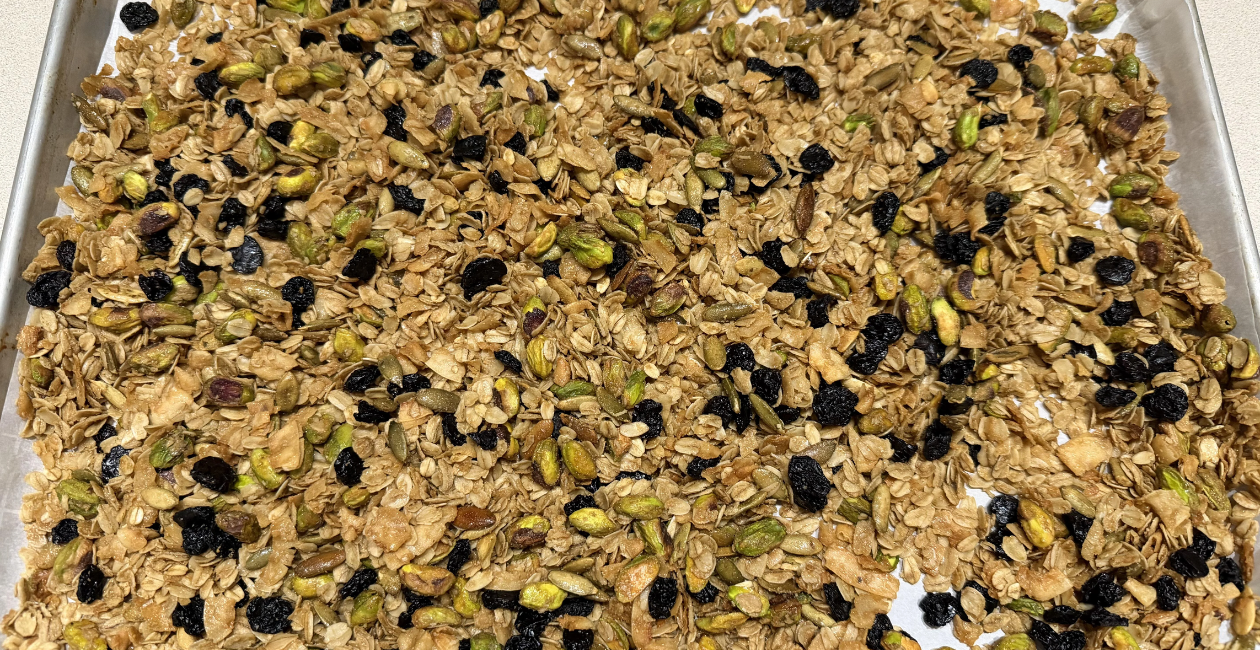
There is a reason people keep coming back to Eleven Madison Park granola. It does not taste like the average bag of grocery-store granola that leans too sweet, too dry, or oddly flat. The recipe that made it famous, and the versions sold through Eleven Madison Home, are built around contrast: sweet but not sugary, salty but not harsh, crunchy without turning into hard clusters, and rich without feeling heavy. Across the published recipe and the current product descriptions, the flavor identity stays remarkably clear.
At the center of it all is a very specific combination of rolled oats, pistachios, pumpkin seeds, coconut chips, dried sour cherries, maple syrup, light brown sugar, extra-virgin olive oil, and a noticeable amount of kosher salt. That ingredient list matters because none of the pieces are doing the same job. Each one brings something different, and the finished granola tastes so good because those parts do not blur together.
The first big reason is the salty-sweet balance
A lot of granola recipes aim for sweetness first. This one does not. The published Serious Eats version includes a full tablespoon of kosher salt, and the recreated recipe at Well Seasoned Studio follows that same bold seasoning profile. That is a huge clue to why the granola stands out. The salt is not just there in the background. It actively sharpens the flavor of the oats, makes the sweetness taste cleaner, and keeps the mix from drifting into dessert territory.
That is also why people describe it as addictive. When granola is only sweet, you get the idea after one bite. When it is sweet and salty at the same time, the flavor keeps changing as you eat. You notice the maple, then the salt, then the nuttiness from the pistachios and pumpkin seeds, and then the tart chew of the fruit. It feels more layered than a typical breakfast cereal, which is exactly why it keeps people reaching back into the jar.
The ingredient mix is smarter than it looks
The granola does not rely on one star ingredient. It works because the mix is balanced. Rolled oats give it structure and that familiar toasted base. Pistachios bring a buttery, slightly savory depth that tastes more elegant than the usual almond-heavy granola. Pumpkin seeds add another layer of crunch and keep the flavor from leaning too soft or too sweet. Coconut chips bring toastiness and a light natural sweetness, which helps round out the whole thing.
Then come the dried sour cherries, and they may be the ingredient that makes the biggest difference emotionally. Without them, the granola would still be good. With them, it becomes memorable. They add chew, tartness, and little bursts of concentrated fruit flavor that cut through the richer ingredients. Even the current Eleven Madison Home retail versions highlight that fruit-and-nut contrast, especially in the Cherry Pistachio flavor, which is described around dried cherries, pistachios, and coconut.
Olive oil gives it a richer, more grown-up flavor
One of the most important details in the recipe is the use of extra-virgin olive oil instead of relying only on butter or neutral oil. Serious Eats includes it in the syrup mixture with light brown sugar and maple syrup, and the recreated versions keep it for good reason. Olive oil gives the granola a more savory edge and a fuller mouthfeel, which fits the restaurant-style personality of the recipe.
That richer base is part of what makes the granola feel a little more polished than standard homemade versions. It does not taste like a kid snack. It tastes like something meant to sit next to good yogurt, fresh fruit, or even get sprinkled over ice cream. The oil helps carry the toasted flavor of the oats and nuts, and it also helps the granola brown evenly in the oven.
The sweetness is measured, not overwhelming
Another reason this granola tastes so good is that it is sweet in a very controlled way. The published formula uses light brown sugar and maple syrup, which gives the sweetness more depth than plain white sugar alone. You get caramel notes from the brown sugar and a warmer, rounder sweetness from the maple. Neither one completely takes over.
That restraint matters. It lets the savory ingredients stay visible. You can still taste the pistachios, the pumpkin seeds, the coconut, and the salt. In other words, the sweetness supports the granola instead of flattening it. That is a big part of why it feels so balanced and why it works as both a breakfast food and a straight-from-the-jar snack.
Texture is a bigger deal here than people realize
A lot of people think the magic is only in the ingredients, but the texture does just as much work. The Serious Eats recipe has you spread the mixture on a parchment-lined sheet pan, bake it at 300°F, and stir it often so it dries evenly and turns lightly golden. That technique creates a crisp granola with distinct toasted bits rather than one huge slab of sticky clusters.
That texture choice fits the flavor profile perfectly. Because the granola stays loose and crisp, every spoonful gives you a more even mix of oats, nuts, seeds, coconut, and fruit. You are not digging through giant sugary chunks to get to the good parts. The crunch feels cleaner and more deliberate, which is part of what gives the granola its polished feel.
It tastes like a restaurant version of comfort food
One thing that makes Eleven Madison Park granola so appealing is that it does not feel flashy in the wrong way. It is still granola. It is still built from pantry ingredients. But the proportions and ingredient choices make it taste like the restaurant version of something familiar. Pistachios feel more distinctive than the usual nut mix. Dried sour cherries are brighter and sharper than raisins. Coconut chips add more drama than standard shredded coconut. The whole recipe feels thoughtful without becoming fussy.
That is also why the granola translates so well from restaurant favorite to packaged product. Eleven Madison Home continues to sell granola in flavors like Cherry Pistachio, Apple Cranberry, and Banana Berry, which suggests the core appeal is not tied to one moment or one dining room. The brand clearly sees granola as part of its pantry identity, not just a one-off recipe people happened to like years ago.
It works in more ways than one
Great granola is never just about the first bite. It is about how often you want to use it. This one works over Greek yogurt, with fruit, with milk, or as a snack on its own. Some recipe pages even suggest using it on desserts like ice cream, and that makes sense because the salty-sweet profile already feels dessert-friendly without becoming cloying.
That flexibility adds to the reputation. When a food tastes good in different settings, people remember it more. A granola that only works in a breakfast bowl is fine. A granola that also feels right in a parfait, on top of fruit, or grabbed by the handful from a jar starts to feel like something worth talking about.
Why people keep chasing the copycat version
The copycat interest around Eleven Madison Park granola makes sense once you look at the actual formula. It is not trying to reinvent granola with obscure ingredients. It is taking familiar ingredients and pushing them harder in the right directions. More salt than most people expect. Better contrast between rich and tart. A cleaner bake. A more thoughtful nut-and-seed mix. That is exactly the kind of recipe home cooks love to chase because it feels both reachable and a little special.And really, that may be the best answer to what makes it taste so good. Eleven Madison Park granola succeeds because it understands that great granola is not just about sweetness or crunch. It is about tension. Kosher salt against maple syrup. Toasted rolled oats against chewy dried sour cherries. Rich olive oil against the freshness of fruit. Nutty pistachios and pumpkin seeds against crisp coconut chips. When all of that lands in the same bite, it tastes more alive than ordinary granola.
