



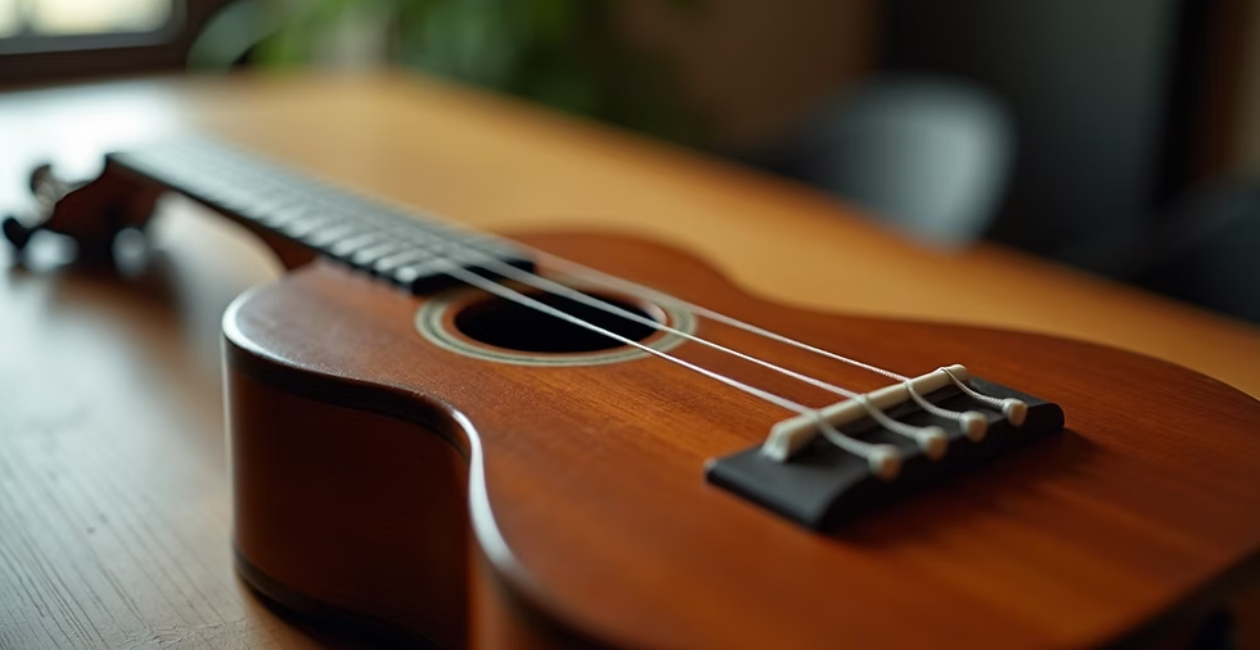
Buying your first ukulele should feel fun, not confusing. The problem is that most beginners run into the same two traps. They either buy the cheapest thing they can find and end up with an instrument that feels frustrating, or they spend way more than they need because they assume a higher price automatically means a better start. In reality, the best beginner ukulele usually sits somewhere in the middle: comfortable to play, stable enough to stay in tune, and affordable enough that you do not regret the purchase a month later.
If you want the short answer, here it is. For most people, a concert ukulele is the safest first choice because it gives you a little more room for your fingers than a soprano, while still staying light, simple, and beginner-friendly. A soprano ukulele is still a great option if you want the classic size and sound, while a tenor ukulele makes sense if you have larger hands or already know you want a fuller tone. A baritone ukulele is more of a niche pick because it uses D G B E tuning instead of the standard G C E A.
Start with size, not brand
A lot of beginners start by asking which brand is best, but size matters more at the beginning. If the instrument feels awkward in your hands, it does not matter how popular the logo is on the headstock. The four main ukulele sizes are soprano, concert, tenor, and baritone. Official and retailer guides consistently describe soprano as the smallest and most traditional, concert as the balanced middle ground, tenor as fuller and roomier, and baritone as the largest common size with guitar-like tuning.
Why soprano ukulele works for some beginners
A soprano ukulele is the size most people picture first. It is small, light, portable, and closely tied to that bright, classic ukulele sound. Kala says it has the shortest scale and the tightest fret spacing, which is why it is often a good fit for younger players and people with smaller hands. If you want something cheerful, compact, and easy to carry around, soprano still makes a lot of sense.
The tradeoff is space. If your fingers feel even a little cramped, a soprano can quickly go from charming to annoying. That is why some beginners love it immediately, while others outgrow it almost as soon as they start learning chords.
Why concert ukulele is often the sweet spot
If you are not sure where to start, the concert ukulele is usually the smartest choice. Recent size guides describe it as warmer and more balanced than a soprano, with a little more room between frets and a shape that still feels compact. That extra space can make chord changes easier, especially for adults and anyone with average or slightly larger hands.
This is the size I would point most beginners toward first because it tends to solve the biggest early frustration: feeling cramped. You still get the approachable feel of a beginner instrument, but with a little more comfort and a fuller voice. It is also the size featured in starter options like the Kala Learn To Play Concert Ukulele Starter Kit, which is marketed directly at first-time players.
When a tenor ukulele is worth considering
A tenor ukulele is not too advanced for a beginner, but it is not automatically the best first pick either. It usually offers more finger space, more projection, and a richer sound than smaller sizes, which can be appealing if you already know you want to stick with the instrument. Some guides also frame it as a good fit for medium-to-large hands and for players interested in fingerstyle.
Where people go wrong is assuming bigger means better. It only means better if the extra size actually helps you. If you want a casual first ukulele for simple strumming, you may not need a tenor at all.
Why baritone ukulele is usually not the best first step
A baritone ukulele is interesting, but it is a different lane. Unlike the smaller standard sizes, it is commonly tuned D G B E, which is closer to the top four strings of a guitar. That can make it appealing for guitar players, but it also means beginner lessons built around standard G C E A tuning do not transfer as cleanly.
That does not make baritone a bad instrument. It just makes it less beginner-proof for the average first-time buyer.
Set a budget that makes sense
The best way to avoid overspending is to set a range before you start shopping. Several beginner guides place a good playable first ukulele in the $50 to $200 range, while community advice often says quality jumps noticeably as you move closer to $150 to $200. In other words, you do not need to spend a fortune, but going too low can leave you with poor tuning stability, rough setup, or a toy-like feel.
A practical way to think about it is this:
A very tight budget can still get you started, but you will need to shop carefully.
A moderate budget gives you the best balance of comfort and value.
A bigger beginner budget should go toward better build quality, not flashy extras.
Do not pay extra for the wrong things
Beginners often overspend on features they do not actually need. Fancy finish, electronics, unusual body shapes, or decorative details can look exciting, but they do not matter as much as playability. At the beginning, your money is better spent on a ukulele that feels comfortable, stays in tune, and comes from a reliable beginner-friendly line. Guides under $200 consistently focus on basics like size, wood, tone, and sensible features rather than unnecessary upgrades.
That is also why a simple mahogany beginner model remains popular. It is a common wood choice in entry-level and mid-level ukuleles, and it tends to show up again and again because it balances cost, tone, and familiarity. Cordoba and other brands still build beginner-friendly models around mahogany construction or solid mahogany tops for exactly that reason.
Know when a starter kit is actually a good deal
Starter kits can be worth it, but only if the actual instrument is solid. A good beginner bundle usually includes the basics you would end up buying anyway, such as a clip-on tuner, a gig bag or tote, a quick-start guide, and sometimes online lessons or a tuning app. The current Kala starter kits sold through Guitar Center include exactly those kinds of extras.
That said, accessories should never be the reason you buy the instrument. A bad ukulele with a pile of extras is still a bad ukulele. The real question is whether the instrument itself feels like something you will still enjoy a few months from now.
Brands that keep showing up for beginners
You do not need to obsess over brands, but a few names appear often in beginner discussions and buying guides. Kala, Cordoba, Mahalo, Ibanez, and Martin all show up across guides, though not always at the same price level. Kala in particular appears repeatedly in beginner recommendations, starter kits, and affordable entry-level models.
That does not mean every model from those brands is automatically right for you. It just means these are good places to start if you want options that have already earned some trust with beginners.
A simple way to choose without getting overwhelmed
If you want to make this easy, use this path.
Choose a concert ukulele if you want the safest all-around beginner option.
Choose a soprano ukulele if you want the most traditional size, the brightest sound, or something especially light and compact.
Choose a tenor ukulele if you want more room for your fingers and expect to keep playing seriously.
Skip baritone ukulele unless you specifically want the guitar-like tuning.
Then keep your budget realistic, focus on comfort first, and only pay for extras you will actually use. That approach will protect you from most beginner buying mistakes.
What matters most in the end
The best ukulele for beginners is not the most expensive one, and it is not always the one with the longest feature list. It is the one that makes you want to keep picking it up. For most people, that means a comfortable concert ukulele from a trusted beginner-friendly brand, bought at a sensible price, with just enough accessories to get started.If you remember one thing, let it be this: spend enough to get something playable, but not so much that your first ukulele feels like a high-stakes purchase. A good beginner instrument should lower the pressure, not raise it.
