



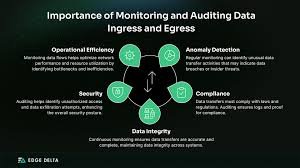
At a basic level, ingress means traffic coming into a system, and egress means traffic going out of it. That sounds simple enough, but the difference matters because modern networks do not just move data around. They inspect it, route it, filter it, prioritize it, and sometimes block it depending on where it is headed and why. In technical sources, this inbound-versus-outbound distinction is used across computer networking, cloud computing, Kubernetes, VPNs, and network security.
If you are reading firewall settings, cloud architecture docs, or a Kubernetes guide, you will keep seeing these two words. That is because ingress traffic and egress traffic are not just labels. They shape how teams think about security, performance, compliance, and access control. IBM, Imperva, and VergeCloud all frame the distinction as something that directly affects how organizations manage traffic, protect systems, and control communication with external networks.
What ingress and egress mean in simple terms
The easiest way to understand the difference is this: ingress is inbound data, while egress is outbound data. Imperva explains data ingress as incoming data from external sources into a system or network, and data egress as data leaving a system for clients, services, or other destinations. IBM uses the same core distinction in its Kubernetes explainer, describing ingress as inbound traffic and egress as outbound traffic.
That definition gets clearer once you remember that these terms depend on perspective. KZero points out that traffic entering an organization’s network is leaving the public internet, and traffic leaving the organization’s network is entering the public internet. So the same packet can be egress from one point of view and ingress from another.
A simple example helps. When you open a website, your browser sends a request out. From your device, that is egress. When the website sends the page back to you, that incoming response is ingress. OpenVPN uses this kind of practical framing to show why the terms are easier to understand when you tie them to actual traffic movement rather than abstract definitions.
Why the difference matters in networking
The difference matters because inbound and outbound traffic create different risks and require different controls.
When traffic is coming in, teams are often focused on keeping bad things out. That can mean blocking malware, filtering suspicious requests, reducing exposure to DDoS attacks, or limiting who can reach specific services. KZero explains that organizations commonly use firewall rules, ingress filtering, intrusion prevention systems, and web application firewalls to defend against inbound malicious traffic. VergeCloud adds that ingress traffic filtering often involves authentication, IP whitelisting, geolocation rules, traffic shaping, and edge protection.
When traffic is going out, the concern changes. Outbound traffic can still be perfectly normal, but it can also expose sensitive data, create unnecessary costs, or allow systems to communicate with destinations they should never reach. Fortinet focuses heavily on this side of the problem, describing data egress as a security concern when information is sent to unauthorized recipients or when outbound activity contributes to data leakage, data exfiltration, or broader data breaches. IBM makes a similar point in Kubernetes, noting that organizations often want tight control over which services can connect to external endpoints for both security and compliance reasons.
So while the words themselves are straightforward, the operational meaning is bigger. Ingress is usually about controlled entry. Egress is often about controlled exit.
Why ingress matters for security and reliability
In most organizations, inbound traffic gets a lot of attention because it is the obvious place where outside threats first show up. A malicious request, exploit attempt, or traffic flood has to come in before it can do damage. That is why ingress security is tied so closely to network firewalls, WAFs, IPS, and DDoS protection. KZero explicitly calls out this focus on inbound malicious traffic as a core part of reducing cybersecurity risk.
But ingress is not only about blocking threats. It is also about making sure legitimate traffic reaches the right destination efficiently. VergeCloud describes ingress traffic filtering as a way to enforce access rules, prevent server overload, reduce bottlenecks, and use edge servers or security appliances near the network perimeter to improve protection and reduce latency. That is why ingress matters to both security teams and infrastructure teams. It affects who gets in and how smoothly they get in.
In practice, that means a company might allow inbound traffic only to approved ports, only from approved IP ranges, or only through specific entry points such as a load balancer or reverse proxy. The goal is not simply to accept incoming traffic. It is to accept the right incoming traffic.
Why egress matters just as much
A lot of people instinctively worry more about what comes into a network than what goes out. That is understandable, but incomplete.
Outbound traffic can tell you a lot about what is happening inside your environment. If a compromised system starts communicating with a suspicious external host, that is an egress problem. If a user or service sends protected information to the wrong place, that is an egress problem too. Fortinet’s explanation of data egress emphasizes risks such as unauthorized data transfer, insider threats, accidental disclosures, and policy violations.
There is also a performance and architecture angle. Imperva notes that managing data egress helps control costs and optimize network performance, especially in cloud environments where data transfer patterns affect both design and billing. VergeCloud adds that outbound traffic may be routed through CDNs, proxies, or caching layers to improve delivery speed and reliability.
So egress is not just “traffic leaving the network.” It is also about deciding what should be allowed to leave, where it should go, how it should get there, and whether it creates business or security risk along the way.
The role of ingress and egress in cloud and Kubernetes environments
This is where the topic becomes especially important. In modern infrastructure, services are constantly talking to users, APIs, databases, and other systems. That makes traffic direction a design issue, not just a glossary definition.
IBM’s Kubernetes explanation is especially useful here. It shows that ingress in Kubernetes is about managing external access into services running inside a Kubernetes cluster, while egress is about controlling how workloads connect to outside destinations. IBM also notes that organizations typically do not want unrestricted outbound communication in production environments, which is why network policies, egress gateways, and dedicated egress nodes are used to centralize and control outbound connections.
That matters because modern systems rarely live in isolation. A pod may need to receive inbound application traffic from users while also making outbound calls to payment gateways, APIs, or external services. If you do not separate ingress rules from egress rules, it becomes harder to secure the environment, troubleshoot issues, or apply a zero-trust model. IBM specifically notes that egress controls can define which addresses or domains pods can reach and support explicitly authorized communication only.
How VPNs make the concept easier to understand
One of the clearest explanations in the competitor set comes from OpenVPN, because it shows how ingress and egress affect real user traffic rather than just infrastructure diagrams.
OpenVPN explains that in a split-tunnel setup, only selected traffic goes through the VPN tunnel, while a user’s normal internet egress point remains unchanged. In a full-tunnel setup, by contrast, all internet-bound traffic may be routed through the VPN server. The article points out that this can improve protection in some cases, but it can also put strain on bandwidth and slow the VPN when many remote workers are connected.
That example matters because it shows the practical side of traffic direction. Ingress and egress are not just terms network engineers use in documentation. They influence routing, user experience, cloud access, and how secure remote connections actually work.
Why searchers get confused by this topic
Part of the confusion comes from the fact that ingress and egress are not networking-only words. The term also appears in property law and real estate, where it refers to rights of entry and exit. That is why some search results for this keyword drift into non-technical territory. Wikipedia’s page is about the legal meaning rather than the networking one.
For an IT reader, though, the important point is that in networking the terms describe the direction of traffic flow and help define how systems are secured and managed. A short clarification is often enough: yes, the terms exist outside tech, but in networking they are about inbound and outbound traffic.
A simple way to remember it
If the traffic is coming into your system, think ingress. If the traffic is going out of your system, think egress.
Then take one more step and ask why that direction matters. Are you trying to stop inbound threats, authenticate incoming users, and protect applications? That is usually an ingress question. Are you trying to prevent data leakage, restrict outbound communication, route traffic efficiently, or control cloud access? That is usually an egress question. The underlying definitions stay simple, but the practical consequences are what make the distinction important.
Why the distinction matters more than it seems
This topic looks basic at first glance, but it shows up everywhere because it sits underneath so many important decisions.
Teams use ingress thinking to protect applications, expose services safely, and manage who can reach internal systems. They use egress thinking to reduce data risk, enforce policy, and control how systems communicate externally. In cloud and Kubernetes environments, that distinction becomes even more important because traffic patterns are more dynamic and distributed. Across the strongest technical sources, the common thread is clear: understanding ingress and egress is part of building systems that are more secure, more observable, and easier to manage.
In other words, the reason the difference matters is not because the words are complicated. It is because the direction of traffic changes what you should allow, what you should inspect, and what you should worry about.
